Anna’s return to the outdoors
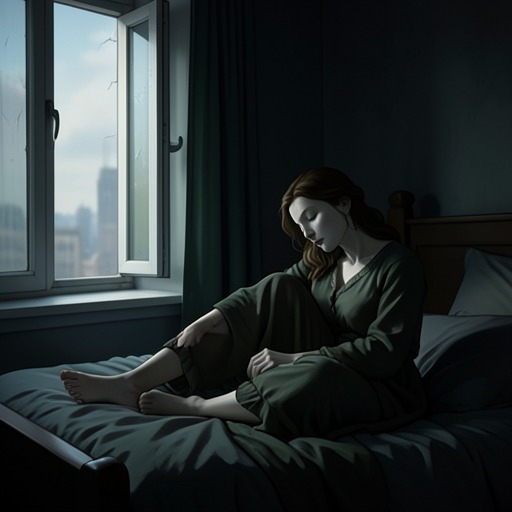
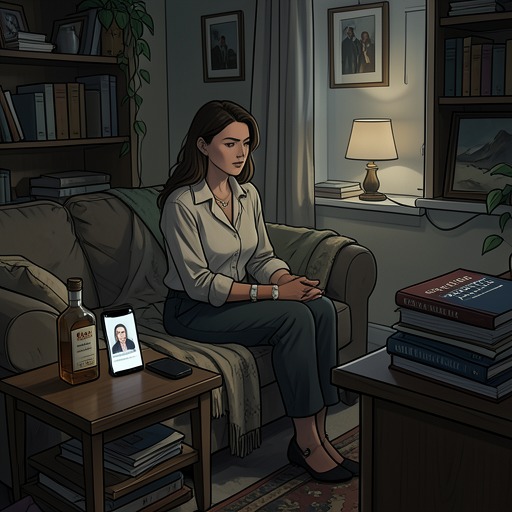
The Woman in the WindowAnna Fox’s return to the outdoors marks a decisive change from waiting for life to resume to taking a first step toward it. With Bina beside her, Anna reaches the top of the stairs, counts, and crosses the threshold into the snowy garden. The scene does not declare her grief or depression resolved; it makes rejoining the world an action she is ready to begin.
The Decision to Stop Waiting
Before she reaches the door, Anna names the forms of waiting that have held her in place. She has waited for her family to return, but accepts that they will not. She has also waited for her depression to lift, and now understands that it will not do so without her help. These recognitions give the moment its emotional weight: going outdoors is not a claim that loss has ended, but a refusal to let waiting be her only response to it.
The decision follows a chain of reasoning rather than a sudden cure. Anna recalls having fought for her life on a roof in the rain and takes that struggle as evidence that she does not want to die. From there she reaches a practical conclusion: if she wants to live, she must begin living. The movement from survival to participation turns the scene into more than a change of location. Anna is acting on the will to live that she has just identified.
Bina and the Threshold
Bina leads Anna to the door and the top of the stairs, offering guidance at the point where Anna must make the crossing herself. The distinction matters: Bina can bring her to the threshold, but Anna must take the final step. When Bina releases her hand, she walks into the garden, leaving footprints in the snow, then turns and beckons Anna to follow. The invitation is concrete and quiet, expressed through movement rather than an argument.
The setting gathers the scene’s oppositions into a few details. Sunlight is blasting the house; Anna is clearheaded and clear-eyed; beyond the doorway lies the snow-covered garden. For someone who has been shut inside, the outside is not simply open space but a boundary she must approach and cross. Bina’s tracks make a visible path into that space, while her released hand leaves the act of following to Anna.
Counting and Crossing
Anna uses counting as she prepares to move: one, two, three, four. The familiar sequence gives the transition a measured rhythm, placing a small, repeatable action between the decision and the step. She closes her eyes, opens them, and steps into the light. The scene thus unfolds in distinct beats: resolve, counting, a moment of closure, renewed sight, and movement outward.
That sequence makes the ending deliberately modest. Anna does not describe a complete recovery or a return to ordinary life; the evidence of change is the step itself. The passage from closed eyes to opened eyes parallels the larger shift from remaining inside to facing what is beyond the house. Her return begins with a single crossing, not with a guarantee about what will follow.
Significance and Aftermath
As the novel’s closing movement, Anna’s step answers the isolation that has shaped her life at home without erasing the family loss behind it. The light and the footprints offer no easy restoration: her family will not come back, and her depression will not lift unaided. Instead, the ending gives her a limited but consequential agency. She can choose to act, accept help from Bina, and move into the world one step at a time.
The scene’s force comes from joining physical movement to recognition. Anna’s reasoning about the rooftop turns a past fight for survival into a present reason to continue living; Bina’s guidance carries her to the boundary; counting helps her approach it; and the final step makes her decision visible. The return outdoors is therefore both an event and a beginning: Anna has not left grief behind, but she has stopped treating waiting as the only possible future.